
Get to know our 2026 Merge speakers

Josh Penzell
Coe Lacy

David Crawford

Drew Colthorp

J.R. Innes
Jon Fazzaro

Chris Woodruff
Rachael McQuater

Rex Rainey

Sandhya Subramani

Scott Carroll
Dr. Mary Brown
Hannah Bronkema
Josh Penzell
Managing Director, AI Innovation & Strategy, Imagination Applied
Josh Penzell directs for a living — and not just on stage. As Founder and AI Transformation Strategist at Imagination Applied, he draws on an MFA in Theater Directing and an MBA to help leaders do what great directors do: get a room full of different people moving together toward something real. His proprietary methodologies — TheaterThink® and Human CaffeineTM — are built on the idea that AI adoption is less a technology challenge than a performance one. His book Artistic Intelligence: A Manifesto is forthcoming, and he still believes the most powerful technology in any room is a person who genuinely means it.
-
Most leaders treat AI like a vending machine: putting in a prompt and hoping for a result. This only leads to "average" work that looks like everyone else's. To find real breakthroughs, you must stop acting like a technician and start acting like a creator., Josh Penzell takes you behind the scenes of his creative process as a theatre director process to show you how to manage a "cast" of humans and AI agents. You will learn to contrast the difference between giving commands and giving direction, using a "Director’s Ear" to evaluate AI work and ensure it stays authentic to your brand. By learning to curate the best ideas and edit the output until it’s world-class, you can construct a team where humans do what they do best and AI handles the rest, turning generic technology into your company’s secret weapon.
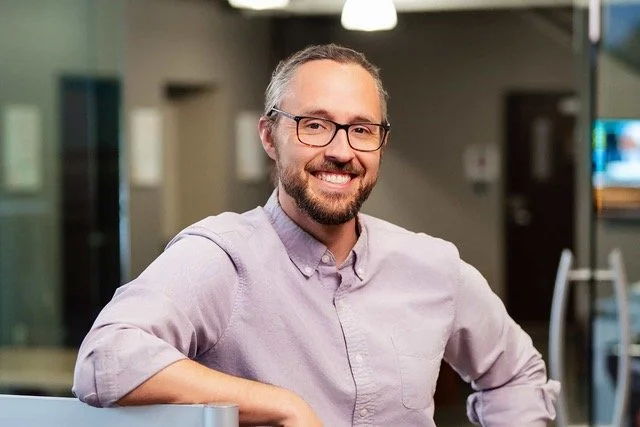
Coe Lacy
"Coe Lacy is a 4th-generation marketer—something he never planned to carry on but has found fulfillment in nonetheless. With a strong background in the arts, he has developed a career as a self-taught, multi-hyphenate design professional. In his current role as Art Director at BizStream, Coe enjoys getting to know each client and how their business works, digging to uncover the narratives that connect them to their customers in meaningful ways. Outside of work he continues to pursue art and music, teaching drawing classes and pursuing mentorships with world-class artists."
Art Director, BizStream
-
For 20 years we've seen the responsibilities of designers expand and shift while titles and salaries have not. AI tools have given us the ability to actually deliver effectively on these demands. This talk cuts through the hype, giving context to the situation we find ourselves now and a view towards the future where roles and responsibilities continue to collapse along with real-world use cases from the agency world.
David Crawford
David is a Partner at Michigan Software Labs, and helps companies solve their biggest problems through technology. He engages early to uncover where solutions can create the most value, then leads teams to get the job done right. Having worked as a developer in many product development industries, and for several consulting firms, he understands how to deliver from both sides of the table.
Lead Software Engineer, Michigan Software Labs
-
One of the largest barriers to adoption of AI is not technical capability, but communication. Many devs and engineers can see where AI could add value, yet struggle to make a compelling case to decision makers who must weigh cost, risk, and strategy. This talk explores how technical implementers can translate AI opportunities into language that resonates with leadership, bridging the gap between technical insight and business buy in.
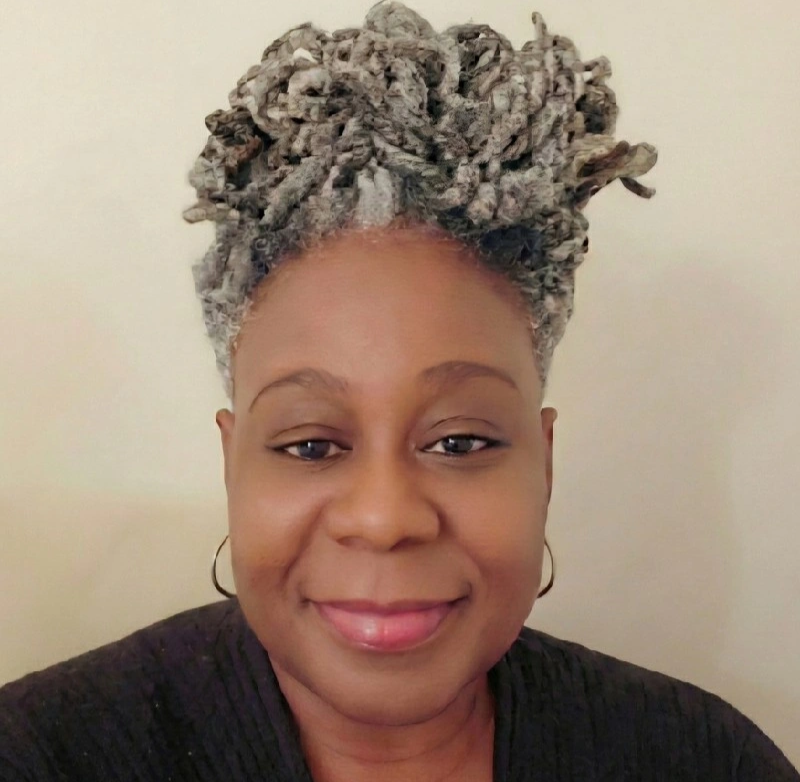
Dr. Mary Brown
Dr. Mary Brown specializes in the intersection of artificial intelligence, organizational culture, and human sensemaking. With a strong focus on ethical AI use and organizational dynamics, they help teams build the absorptive capacity necessary to integrate technology sustainably.
Sr. Culture Consultant, Steelcase
-
Caught between the pressure to ship AI quickly and the strict oversight of governance, software teams often face innovation gridlock and burnout. This session introduces a human-centered AI Maturity Model that positions organizational psychological safety and absorptive capacity as critical technical prerequisites, rather than just HR concepts. Attendees will learn how to intentionally design agentic workflows that balance automation with human oversight, building intelligent software that satisfies both developer velocity and compliance requirements.
Drew Colthorp
Software Development Practice Lead, Atomic Object
Drew Colthorp is a seasoned software development leader with nearly two decades of experience at Atomic Object, a consultancy that crafts innovative software products. As the Practice Lead of Development, Drew empowers Atomic's developers to deliver exceptional results for clients while fostering rewarding careers. His leadership philosophy centers on equipping people with the tools and skills to analyze, take ownership, and thrive in their roles. Throughout his tenure at Atomic Object, Drew has worn many hats, from hands-on development and technical leadership to architecture and consulting. He actively contributes to shaping Atomic's technical practice, collaborating with senior makers on consulting, technical leadership, and design. Drew is particularly excited about the potential for AI to transform how we build software and solve complex problems.
-
The latest programming models are a miracle: They can truly work autonomously and truly deliver features or whole products! However, as systems and teams get larger and more complex, you can start to hit a wall. This talk will survey key skills, techniques, and team practices that can help keep the humans in the driver's seat and deliver the appropriate level of quality your organization needs.
John “J.R.” Innes
John “J.R.” Innes is a Senior UX Designer at Jewelry Television (JTV), where he focuses on high-volume transactional UX—spanning checkout, returns, navigation, and more. He works to make complex systems frictionless for diverse users, collaborating closely with engineering, product, and executive teams.
His career includes award-winning work in graphic design, infographics, map design, and place-based media. For two decades, he has remained deeply interested in how multidisciplinary teams understand, shape, and refine public-facing products. That curiosity has carried into his active use of AI, both professionally and personally. One of his key insights is how differently people in various roles think, decide, and create.
J.R. lives near the Great Smoky Mountains in Tennessee and remains endlessly curious about people and ideas.
Senior UX Designer, Jewelry Television
-
In this session, J.R. Innes explores the evolving intersection of design, development, and product—disciplines that have long been expected to converge into cohesive outcomes despite often operating in very different “languages.”
As AI tools become embedded in everyday workflows, this session examines how they are reshaping that dynamic. Developers can now generate UI in seconds, product professionals can accelerate planning and research, and designers can rapidly synthesize testing, insights, and systems. While these advances increase both the speed and volume of work, they also introduce new tensions: boundaries blur, traditional roles shift, and teams may feel both empowered and uncertain.
Drawing on experience as a UX designer in ecommerce, J.R. frames AI as a kind of polyglot collaborator—one that operates fluently across disciplines. The session explores what this means for collaboration, decision-making, and the evolving role of human expertise.
Rather than predicting the future of AI, this talk focuses on grounded, real-world observations: where AI meaningfully enhances capability, where human judgment remains essential, and how professionals can adapt without losing the instincts that make their contributions valuable.
Attendees will leave with a practical framework for navigating AI in their own work, with clearer insight into where it can genuinely support their efforts—and where their expertise matters most.
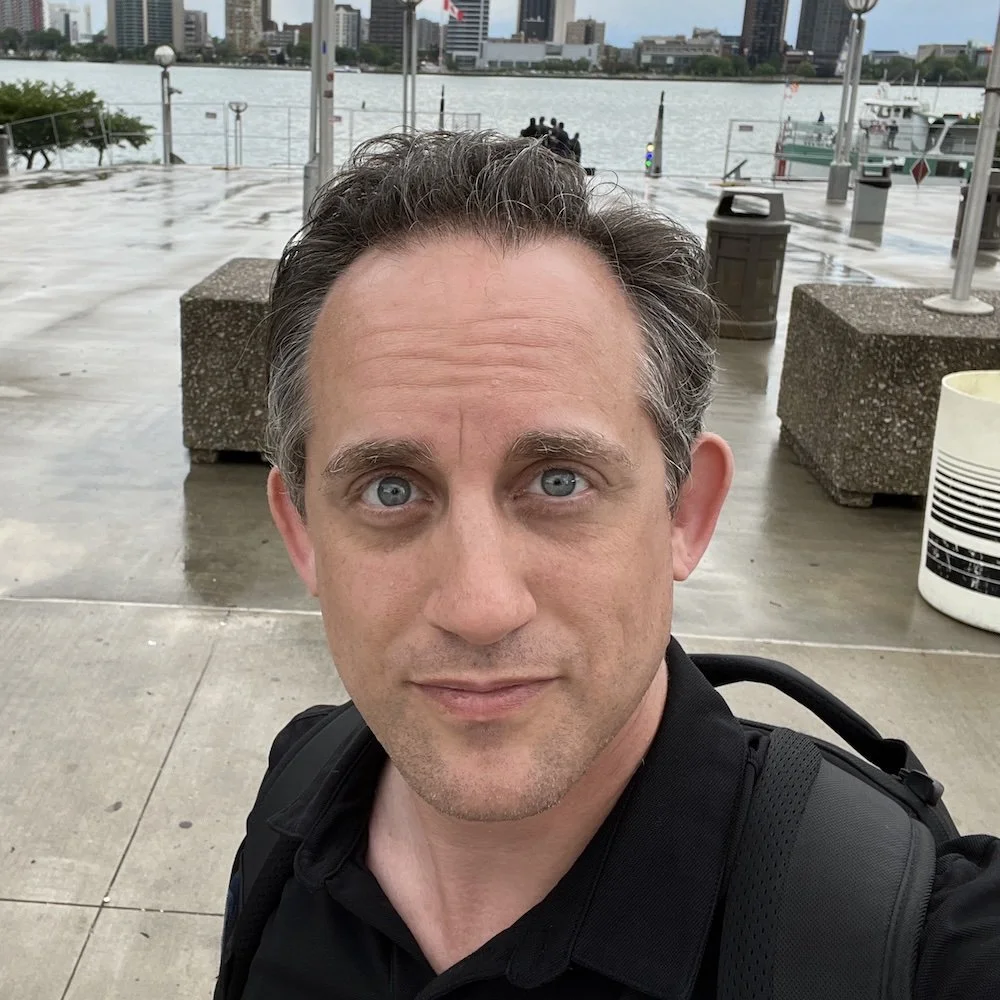
Jon Fazzaro
Jon is a Product Engineering Leader, Coach, Intrapreneur, and Benevolent Cage-Rattler. He has been a software professional for over twenty years and holds a few certifications, but prefers books. The Coaching Habit, When Will it be Done, and Working Effectively with Legacy Code are a few that keep coming in handy. These days, Jon is a Staff Engineer at OpenSesame, helping them to become the best product engineering organization in the world.
Staff Software Engineer, OpenSesame
-
That’s right, you heard right! At long last, we can stop talking about this ridiculous practice. We can stop chastising ourselves and pretending that you can “test” something that doesn’t exist yet.
Test-Driven Development didn’t fail to catch on because it was a bad way to write code; it failed because its name doomed it to be misunderstood from the start.
In this talk, we’ll drop the “testing” mental model, and reframe this practice as Continuous Specification, a practice that actually makes sense of what TDD was trying to achieve for all these years. It also solves an existential problem for coding with AI: how to convey unambiguous expectations for our code, so we can move fast without turning our codebase into a haunted house.
Chris "Woody" Woodruff
Independent Consultant, Woody Technology Studio LLC
Chris "Woody" Woodruff is a Senior Solution Architect and Software Engineer with 25+ years of experience designing and delivering enterprise-scale cloud systems. A Microsoft MVP and .NET Foundation Board Member, he brings a pragmatic approach to solution design — from object-oriented foundations to distributed, event-driven architectures built for reliability and business continuity at scale.
Woody has led engineering teams and architecture practices at companies including Rocket Homes, Rocket Mortgage, and Real Time Technologies, and has consulted for clients ranging from Microsoft and MLB Advanced Media to Fortune 500 enterprises. He is an active mentor, a veteran conference speaker, having presented at NDC, Microsoft TechEd, QCon, and CodeMash among others, and a longtime contributor to the .NET open-source community.
Based in West Michigan, he is currently exploring the frontier of agentic AI and Multi-Agent Systems as tools for accelerating software engineering and architecture workflows.
-
AI amplifies your mindset: it can make things complex or simple, depending on your approach. This talk uses Simplicity-First principles to help teams guide AI toward simpler solutions. You'll learn why AI often chooses complexity, and how to apply the 2 AM Test, Half-Rule, and Primary Path First filters to keep designs clear and manageable. The session covers prompts, reviews, and team practices for using AI to reduce, not add, complexity. Attendees leave with frameworks, templates, and practical tools for evaluating and shaping AI-generated architectures and designs.
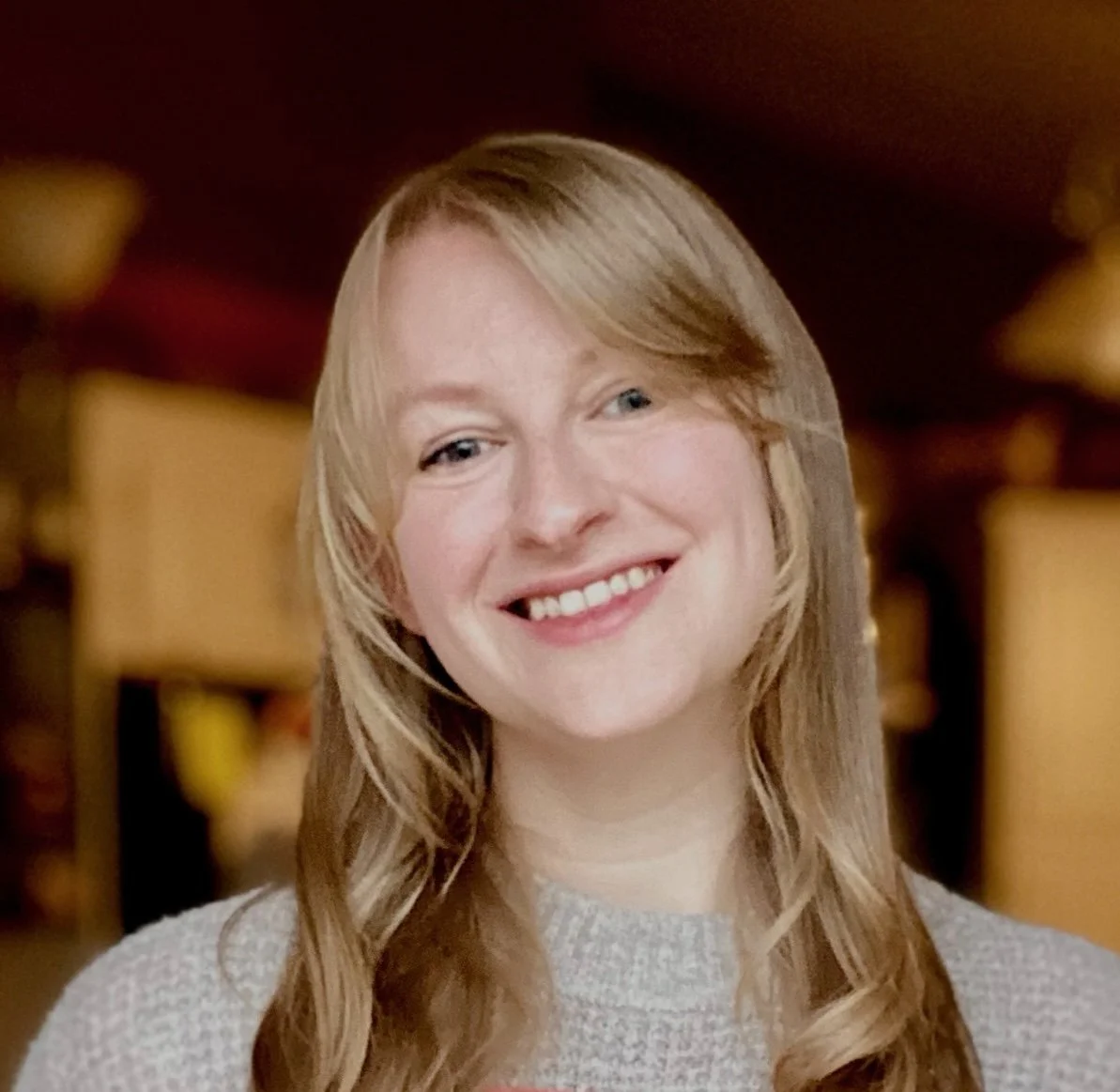
Rachael McQuater
Rachael McQuater is an engineer focused on building clear, resilient software that maps human understanding to hard problems.
Senior Software Engineer, Hightouch
-
Your carefully honed craft is being wrested from your hands by soulless, unreliable machines. The grief and frustration, for the many of us who loved the challenge of constructing elegant, clever solutions in code and toolkit, are nearly palpable. As an antidote, we'll dig deeply into what experienced developers have to bring to the new definition of "good engineering," and how we can derive new types of interest and joy from a craft that's transforming on a day to day basis.
Rex Rainey
Rex is the Creative Lead at BizStream, a leading digital agency dedicated to enhancing brands, websites, and online products. Rex loves all things design but specializes in branding, UI/UX, web design, and illustration. He’s worked professionally as a designer, art director, and creative lead, at various interactive and branding agencies, since the mid-2000s.
Creative Director, BizStream
-
Explore how AI can dramatically speed up illustration concepting without replacing the artist’s voice. Using a recent interior graphics project as a real-world example, we’ll look at how Adobe Firefly enabled rapid iteration of complex visual elements—freeing up more time for refinement, storytelling, and craft.
Sandhya Subramani
Sr. Developer Advocate, Generative AI, Amazon Web Services (AWS)
Sandhya Subramani is a Sr. Developer Advocate with 8+ years of experience in Applied AI Research, specializing in Large Language Models and agentic AI systems. She has developed and deployed AI solutions at organizations including Amazon, Warner Bros, and Fidelity Investments. Her work centers on turning cutting edge research into practical applications, and she is passionate about helping developers build intelligent systems that solve complex problems at scale.
-
What if an AI agent could expand its own capabilities at the moment they are needed?
Most AI agents operate within fixed boundaries. When confronted with tasks beyond their predefined tools, they fail or require manual redesign. This session introduces an open-source architecture for designing self-evolving AI agents. Rather than operating with only predefined toolsets, these agents can dynamically generate new capabilities at runtime, refine their reasoning, coordinate specialized sub agents, and persist improvements across interactions.
This session provides a technical deep dive into building these adaptive systems. We will teach core implementation patterns, examine architectural tradeoffs, and discuss system level considerations including observability and failure containment.
Scott Carroll
Scott Carroll is a Senior Software Engineer at Cypris.ai with 20+ years in distributed systems. He gravitates toward the hardest technical problems he can find—the kind tangled up in other problems nobody's even identified yet. He's built control planes for Alexa, robotic orchestration systems for vertical farms, and platforms for autonomous AI agents. He builds indie games on the side and reads cognitive science papers recreationally.
Born in Michigan, he spent a decade in the Upper Peninsula, a stint on the coasts, and came back to settle in Clare County. He and his wife keep a small homestead with chickens, polydactyl cats, and a hydroponic garden they eat out of year-round. Even off the clock, he can't stop building systems that keep things alive.
Scott is at Merge because he wants to meet you. He's building a network and looking for ways to help more people in Michigan make things that matter.
Senior Software Engineer, Cyrpris
Principal Systems Architect, Rippleroot Labs
-
I'm building an autonomous wildlife research platform in the Michigan woods using an NVIDIA Jetson, research-grade microphones, and a lot of AI-generated code. This talk walks through the real engineering — from designing shielded cable routing to kill 60Hz EMI in my audio feeds, to deploying multi-model ML inference at the edge, to using local LLMs and GitHub Copilot agents to write nearly the entire codebase including tests and CI/CD. You'll walk away with practical patterns for edge deployment, event-driven architectures, and agent-assisted development on a complex solo project.
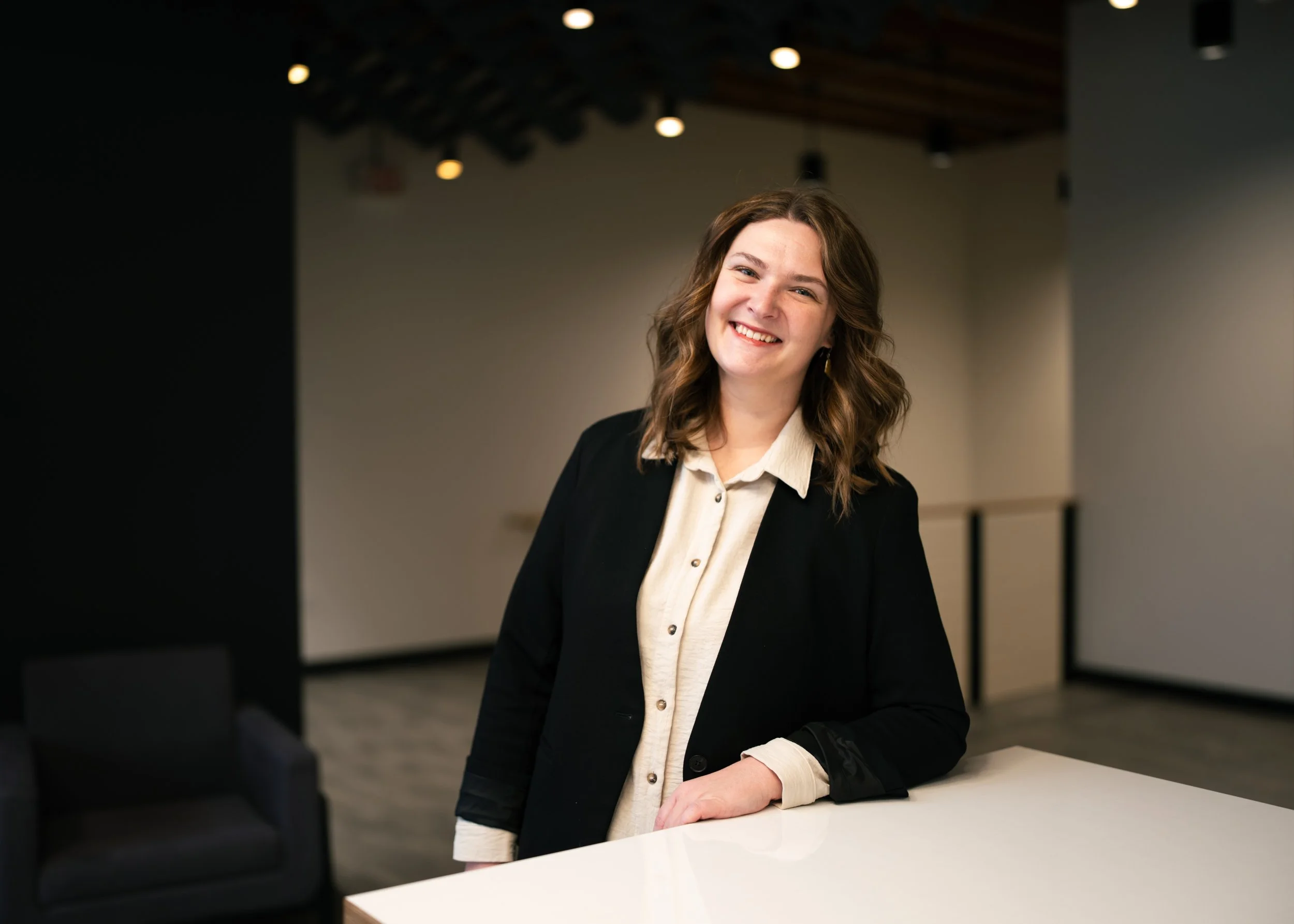
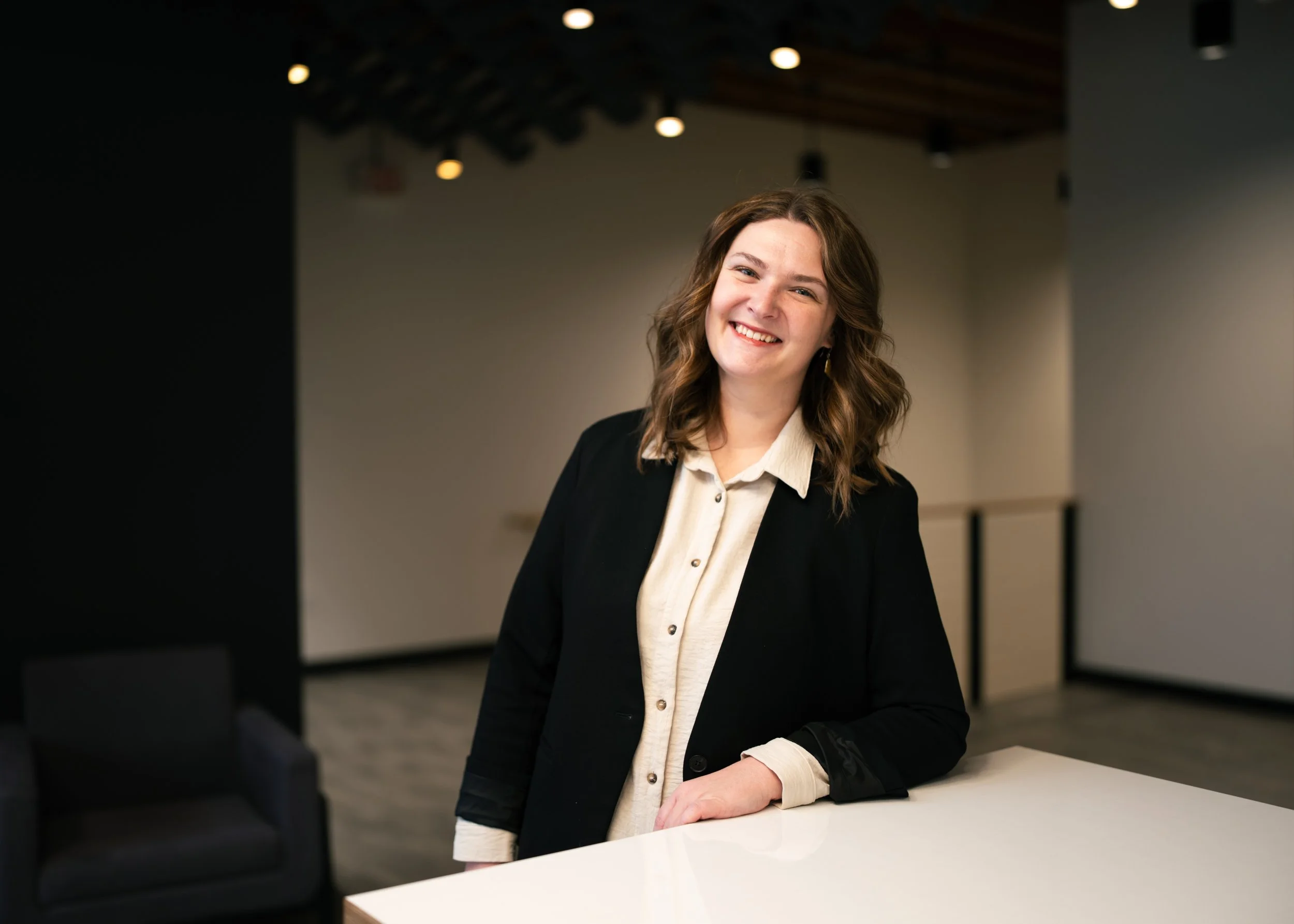
Hannah Bronkema
Hannah is a digital strategist working at the intersection of data, design, and user experience. She partners with organizations to define complex business goals and bring clarity that drives alignment across teams. Her background spans enterprise marketing, e-commerce, and digital analytics, where she has led initiatives that connect real user behavior to measurable business outcomes.
With a Master’s degree in Organizational Leadership, Hannah brings a strategy-first perspective to design and AI. Her perspective is rooted in the belief that AI is only as good as the data behind it. She advocates for a more intentional approach to design, grounded in user research, validated discovery, and human insight that no model can replicate.
Digital Marketing & Analytics Manager, Nextpoint Studio
-
AI can generate interfaces, content, and complex systems in seconds. But without verified data and real user insight, it produces confident output that misses the mark. It doesn’t understand your business context or your users’ actual needs.
Data-driven design has always been about more than access to information. It’s about interpreting data within the context of specific business goals and real human behavior. The kind that comes from discovery, user research, and validated conversations, not synthetic assumptions. That foundational work is what separates useful AI output from generic noise.
Strategy and discovery create the shared context that makes AI-integrated workflows actually work helping teams move faster without losing clarity on what they’re building, who it’s for, and why it matters.